

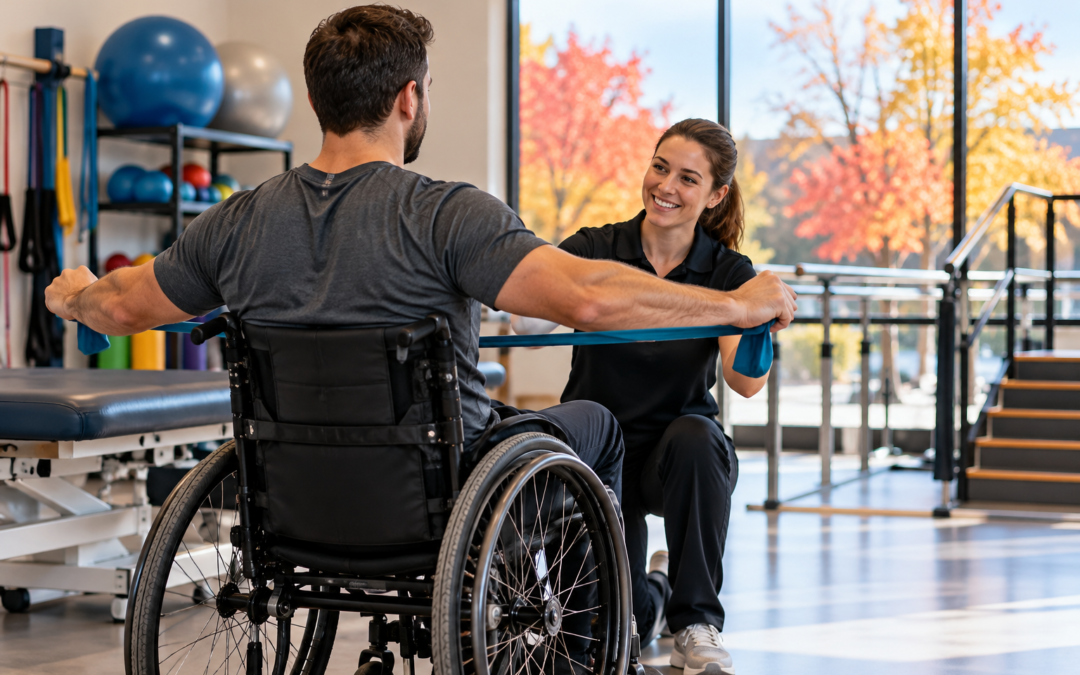
It is October in West Seneca, NY, and the year is three-quarters done. Maybe you have been living with a spinal cord injury for six months. Maybe it has been fifteen years. Either way, fall is a good time to stop, look back at what you worked on this year, and decide what you want to focus on next.
This article offers a simple fall goal check-in for people in long-term recovery and the families who support them. We will look at the kinds of goals people set, a five-step review process, how activity-based recovery may support those goals, and where to find recovery support in Western New York. This is educational information. Always coordinate exercise and rehabilitation plans with your healthcare team.
Why a Fall Goal Check-In Matters for West Seneca, NY Residents
Fall brings real changes to daily routines in Western New York. Shorter days, colder weather, and snow can make it harder to get out for appointments, workouts, and community activities. Holidays add busy schedules for families and caregivers.
A goal check-in now helps you:
- Notice progress you may have overlooked
- Adjust goals that no longer fit your life
- Plan around winter so momentum does not stall
- Start the new year with a clear focus instead of starting from scratch
If you completed a mid-year rehabilitation check-in in the summer, this is a natural follow-up. If you have never formally reviewed your goals, this is a good place to begin.
Recovery Goals Look Different for Everyone
There is no single “right” goal after a spinal cord injury. Walking is one goal some people choose, but it is far from the only one, and it is not more valuable than any other. Goals people commonly work toward include:
- Strength: building upper-body or core strength for daily tasks
- Endurance: being able to stay active longer without fatigue
- Transfers: moving more safely between a wheelchair, bed, car, or shower
- Balance and sitting stability: feeling steadier during daily activities
- Mobility and range of motion: keeping joints and muscles flexible
- Health maintenance: supporting circulation, bone health, and overall wellness
- Participation: returning to work, school, hobbies, or community events
- Confidence and independence: doing more of the things that matter to you, your way
Your goals can change over time, and that is normal. Someone injured many years ago may focus less on early milestones and more on staying strong, preventing secondary health problems, or getting back to an activity they enjoy.
A Five-Step Fall Goal Review
Step 1 — Look back
Write down what you worked on since January. What went well? What was harder than expected? Include small wins, like a smoother transfer or a longer session, because they count.
Step 2 — Name what matters most
Ask yourself: if I could make one area of daily life easier by next spring, what would it be? That answer often points to your most meaningful goal.
Step 3 — Make the goal specific
A goal like “get stronger” is hard to track. A goal like “complete car transfers with less help by March” is clearer. Many rehabilitation professionals use the SMART approach: specific, measurable, achievable, relevant, and time-bound.
Step 4 — Plan for winter
Think about what could interrupt your routine between November and March. Snow, transportation, illness, and holiday schedules are common. Build in backups, such as home exercises your provider approves or flexible session times.
Step 5 — Bring in your team
Share your goals with your physician, therapists, and family. They can help you decide what is realistic and safe, and they can support you when motivation dips.
How Activity-Based Recovery Can Support Your Goals
Activity-based recovery focuses on movement and exercise that engage the body, including muscles below the level of injury, through repetition and specialized equipment. At the Natalie Barnhard Center for Spinal Cord Injury Rehabilitation and Recovery in nearby Cheektowaga, Motion Project Foundation offers one-on-one sessions built around each participant’s personal goals. You can learn more about the center’s activity-based recovery programs and equipment on the foundation’s website.
Depending on an individual assessment, sessions may include:
- Strength and conditioning
- Weight-bearing activity
- Balance and core work
- Range-of-motion and mobility training
- Specialized rehabilitation technology
Activity-based recovery may support strength, circulation, endurance, or functional ability. It does not cure paralysis, and progress looks different for every participant. A professional assessment is needed before you begin, and participants should keep their healthcare team informed. For research-based guidance, see the Model Systems Knowledge Translation Center’s overview of exercise after spinal cord injury.
Tracking Progress Without Losing Motivation
Progress in long-term recovery is often gradual. Tracking it helps you see changes that are easy to miss day to day. For more ideas, read our guide to measuring success in rehabilitation.
- Keep a simple log. Note what you did, how long, and how it felt.
- Pick two or three measures. Examples include time sitting unsupported, number of repetitions, or how much help a transfer needs.
- Check in monthly. Compare this month to last month, not to someone else’s journey.
- Celebrate non-physical wins too. Feeling more confident in public or trying a new activity is progress.
- Expect plateaus. Flat periods are common. Talk with your team about adjusting your plan instead of giving up on it.
Recovery Support Near West Seneca, NY
West Seneca residents are a short drive from the Natalie Barnhard Center in Cheektowaga, Motion Project Foundation’s recovery center. The foundation also offers financial support that may reduce barriers to recovery:
- Hope in Motion Scholarship: Created with support from the Scott Bieler Family Foundation, this program is designed to provide financial assistance for one-on-one recovery sessions for individuals living with spinal cord injuries or paralysis.
- Quality of Life Grants: These may help eligible Western New York residents with rehabilitation programs, equipment, and home or vehicle modifications.
Eligibility requirements apply, and funding depends on current availability. Contact the foundation for current details.
Frequently Asked Questions
How do I set realistic recovery goals after a spinal cord injury?
Start with what matters most in your daily life, make the goal specific and time-bound, and review it with your healthcare team.
Can someone start activity-based recovery years after a spinal cord injury?
Many people explore activity-based recovery long after their injury. Whether it is right for you depends on an individual professional assessment. Outcomes vary.
Do recovery goals have to be about walking?
No. Goals can include strength, transfers, endurance, balance, health maintenance, participation, and independence. Every goal is valid.
How often should I review my rehabilitation goals?
Many people check progress monthly and do a larger review two or three times a year, such as mid-year and in the fall.
Where can I find activity-based recovery near West Seneca, NY?
Motion Project Foundation’s Natalie Barnhard Center is located in nearby Cheektowaga. Call 716-668-4724 to ask about current programs and availability.
Is there financial help for recovery sessions in Western New York?
Motion Project Foundation offers the Hope in Motion Scholarship and Quality of Life Grants. Eligibility rules apply and approval is not guaranteed.
Set Your Next Goal This Fall
A fall check-in does not need to be complicated. Look back, choose what matters, make it specific, plan for winter, and bring your team along.
Ready to talk about your recovery goals in West Seneca, NY? Call Motion Project Foundation at 716-668-4724 or contact the recovery center to ask about current one-on-one recovery programs and the next steps for an individual assessment.
Recent Comments